

Financially Justifying Ethics: A Faustian Bargain?
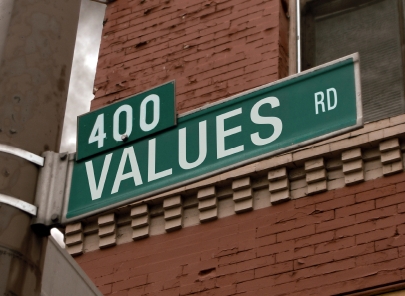 Many readers are familiar with Goethe’s Faust in which the protagonist sells his soul to the devil in return for having his way here on earth. Those who are not familiar with it will find the same theme echoed in Robert Johnson’s Crossroads song, in which the singer sells his soul to the devil in return for fame as a bluesman. (Still more of you may only know this through its 1986 insipid version with Ralph Macchia, redeemed through a transcendent performance by Steve Vai in the role of the Devil’s hands).
But never mind. What I want to talk about is the justification of ethical corporate behavior by referring to its profitability. It is, I suggest, a slippery slope.
Is Ethical Behavior Profitable?
Many writers and organizations suggest that socially responsible behavior is also profitable. Variations on the theme include the profitability of high transparency, candor, employee engagement, customer loyalty, green-is-good-business, etc. In the jargon, you do well by doing good.
I applaud these kinds of studies, because they highlight imperfections in market pricing: usually short-termism. To the extent they are right, they hold short-term managers’ and investors’ feet to the fire to justify their self-aggrandizing decisions.
But they are not perfect. Ethical business propositions may get tagged as unprofitable for one of four reasons. One is market imperfection, one is venality, and a third is stupidity.
But the fourth is where I want to focus. Sometimes the “right” thing simply is not profitable. Stretch out the timeframe as far as you can, fix your cost accounting all you want, remove moral hazard to zero—and it may still not be profitable. There are simply times where the “right” thing does not work out to be profitable for the entity in question.
Enter Mephistopheles.
Justifying Ethics Financially
When faced with an ethics-vs.-profit decision, a moral capitalist like CEO Aaron Feuerstein knows the answer. You do the right thing, he said, simply because—it is the right thing. That’s why they call it ‘the right thing.’ It needs no external justification.
But they’re not listening to Feuerstein much these days. And so the CSR movement has become enamored of proving the profitability of doing good.
There’s a real risk, I would argue, when ethicists and corporate social responsibility advocates put nearly all their emphasis on this line of thought. Simply put, it becomes indistinguishable from justifying ethics on the basis of self-interested materialism. Which destroys ethics.
It’s always been an appealing argument. Think Pascal’s wager, for example, in which self-interest justifies theology. Thus cheapening the theology. Chris Maher makes a wonderful parallel case for the pernicious influence of ROI calculations on charitable giving in an unpublished article.
Perhaps nobody does the integrity-is-good-for-you argument better than Jack Zwingli at Audit Integrity. In a brief conversation with him a few months ago, we discussed this point. Jack suggests that do-gooders are howling in the wind if they don’t speak the corporate language. “It just doesn’t work,” he says, “and that’s the simple argument against it. You have to show companies and investors that there are financial consequences for behaving badly.” (my paraphrase).
As a descriptive statement, it’s hard to argue the contrary. But as a moral statement, it’s well down the slippery slope.
Let’s be clear what’s at stake. Saying “those who behave well make more money,” is a mere figleaf away from saying, “you should behave well because you’ll make more money.”
From there, it’s an easy stumble to saying, “if it’s ethical, it’s profitable,” then, “if it’s not profitable it’s not ethical.” And now we are at, “If it’s not profitable, I’m not doing it—because it’s not profitable. Period.” Ethics is completely subsumed by profitability at this point.
(And don’t give me that old ‘the purpose of a company is…’ routine; I’ll deal with that in a later post.)
Talking About Ethics Without Making a Faustian Bargain
It is surely a good thing that the pro-good analysts continue to highlight stupid, inefficient and self-aggrandizing decisions. The results of better decisions are helpful in both moral and economic terms. And in the long run and in the aggregate, the vast majority of “good” decisions also do “well.” The alignment of the economic and the moral benefits society.
But not every decision presents itself so neatly. When faced with doing the moral thing, which may not be the profitable thing, that is when the Devil comes for his due.
If you have given away your moral high ground by consistently monetizing it, then you no longer have a moral leg to stand on. Companies will flatly reject your pleas, because “it doesn’t make money. Surely you don’t expect us to lose money, do you? After all, you’ve always argued…” And they’d be right.
This is not mere theory. Look at the response of health insurance companies this summer at a congressional hearing. Asked to voluntarily give up their anti-human policy of rescissions, they demurred. Their reasoning? We don’t have to; state law doesn’t keep us from doing it, so we won’t. Why should we? We’d lose money.
Where was the moral high ground on that one? Squandered, out doing the devil’s work by implicitly permitting moral argument from profit.
So where is the high ground? It lies in public shaming. Editorials, demonstrations, op-eds, blogs, YouTube videos, politics. Moral high ground comes from appealing to a larger set of beliefs from a larger group of stakeholders.
Zwingli tells me, “been there, tried that, it doesn’t work.” He is surely right, at least about working in the trenches. But public shaming in a Massachusetts election got Obama’s attention. Public shaming got Goldman’s CEO Lloyd Blankfein to drop a zero from his bonus package. Public shaming cost Tiger Woods an image, and Toyota an untarnished brand.
Real change doesn’t come from the top down. As Margaret Mead put it, “Never doubt that a small, group of thoughtful, committed citizens can change the world. Indeed, it is the only thing that ever has.”
Ethicists and CSR advocates: don’t stop fighting the good/well fight–but don’t give up the high ground by monetizing everything either.
Don’t sign that piece of paper out there at the crossroads.
Great analogy. Let’s step back for a moment to consider the role of ethics.
Do animals exhibit ethical behaviour? If so, when? Animals generally don’t eat their young. Well, at least the mothers don’t. Social animals that live in tribes, such as monkeys and lions, exhibit codes of acceptable behaviour.
Why do they abide by these rules? The reason is that the consequences of misbehaviour are banishment from their tribe, which would make it difficult, if not impossible, to survive. Would it be fair to call these rules ethics? Ethics deal with social norms that benefit society as a whole. If male animals regularly ate their young, they would certainly profit by optimizing their calorie expenditure/intake ratio for the short term, at the expense of propagating their species. The same can be said of human criminals, and so also for unethical corporate behaviour.
So, why should we expect legal persons (corporations) to behave ethically? More importantly, what should motivate them to do so? I agree that short-term profitability considerations (short-termism) is at the root of all unethical behaviour (evil). It essentially steals from the future to satisfy immediate needs and wants. But what are the consequences of unethical behaviour on corporations? Do we banish corporations for their unethical behaviour, as tribes do?
I believe we need to revisit our tribal roots. Imagine corporations that choose to join business communities, entire value chains (even ecosystems) that abide by a common set of values; call them ethics (trans-Atlantic trade between Quakers in the 18th century comes to mind). A community of B Corporations that value the triple bottom line doing business with each other could be an example of this. If a company were to allow its standards to fall short of community expectations, it would face a real threat of being banished to an uncertain future. Both Japanese Keiretsus and Mondragon Corporation serve as examples. Prosper.com, the online peer-to-peer lending service, works similarly by facilitating the creation of borrowing groups that help group members attaining better credit ratings, and as such reduce everyone’s cost of borrowing.
Perhaps the time has come to begin formalizing global business villages (clubs, if you will) that stand for and adhere to distinct codes of conduct; namely ethical behaviour. I can imagine exclusive corporate communities that conduct business at very high standards, impermeable by money alone.
Business leaders need to start thinking long and hard about what their organizations stand for. They can use their own answers as a guide for identifying and hooking up with communities of self-identified, similarly-minded leaders prepared to publicly take a stand and operate according to a common set of community values and ethical standards. Imagine customers and investors also identifying and aligning with these business communities.
Really enjoyed the post, if makes me want to ask two follow up questions.
Is ethics in this sense about doing no harm?
or, is it about a greater requirement that companies do good and bring positive benefits to society?
The libertarian would say that by proving employment, goods, and services they are ALREADY doing a substantial good society. While green liberals would demand a much great social responsibility from companies, and claim a profit-centric attitude is no more than selfish capitalism.
Companies exist for profit sake, but in my mind as fellow human beings when we manage companies our responsibility is to the shareholders AND to society- but how much? How much good should we do? How do managers protect the shareholders and still do substantial good?
Charlie –
I have always thought that decisions that can generate a real, measurable ROI are not really ethical decisions. You do it because it generates more money. Those just end up, eventually, being industry standards.
(I think that the CSR movement uses lots of ROI calculations that are not completely real and not completely measurable and not able to be attributed directly to a particular behavior.)
Bad behavior is punished. As it should be.
It is the behavior in the middle that is the real testing area for behavior. The area between where it is not obviously profitable and where it is punishable.
For me, the true test is what kind of company you want to be part of. This starts at the top, with the CEO, directors and top executives making good behavior as part of their business plan. Not because it is profitable, but becuase that is how you define your company. You do these things because that is the kind of company you want to be associated with.
Like Adrian, this great post has left me with more questions than answers.
No doubt, certain limited examples of corporations demonstrate an ability to leverage the desire to do good as a market driver. Patagonia, with it’s 10% allocation of pre-tax profits to environmental causes makes people feel better about buying their gear. But, by the same token, if that gear were not competitive, I doubt the 10% would be enough to tip the scales. It’s more psychic icing.
And, what of the S.E.C.’s charge that corporations, once public, exist to "maximize shareholder wealth?" Pretty sure wealth, in that context, isn’t intended to be measured by how good the shareholders feel inside.
So, how do you meet that legal standard if being socially conscious comes out a relatively clear loser to being profit driven in the context of maximizing wealth?
Alex Todd’s suggestion: "…Perhaps the time has come to begin formalizing global business villages …" resonates with me. Time was in the human evolution scheme of things humans gathered in small groups with deep social connections and commitment to social contracts and cooperation. Those who operated outside the social guidelines were either ostracized or punished. Altruism and engaging for the "common good" was a way to exist and survive. So, what got in the way of that?
I remember reading a French text, about, maybe Blaise Pascal, where he stated competition started when one of these folks put a border around a piece of land and stated, "It’s mine." Then, all (ethical) bets were off.
My take is this action lead to a way-of-living-life orientation at work (even at home and at play?) stated simply, "If you get yours then I won’t get mine" and thus, IMO, the start of another slippery slope.
So, that’s a question I have. If an organization’s leaders, managers, employees are operating from either a conscious or, perhaps more unconscious, deep fear-based, mindset that "if you get yours, then I won’t get mine," can a focus on ethics, altruism, the common good, and the practice of shaming or "outing" bad-behaving folks, etc., really prevent bad behavior?
Einstein said "The significant problems we face cannot be solved at the same level of thinking we were at when we created them." So, my take on Einstein’s quote is not that he’s pointing to the actual "thinking’ but to something "higher" element of a human– consciousness. And, that’s another question. If the level of consciousness – how one orients to the planet, the world, the people in it and to work – remains static, can/will "ethics" change anything?
Art Kleiner, ("Who Really Matters"), writes, "If you want to change an organization, you start by changing the patterns in which people talk together, the things they talk about, the frequency of their contact and the makeup of those who overhear them." And, for me, until one moves to a higher/different level of consciousness, my take is the patterns will be repeated over and over. Until and unless we shift from a "zero-sum" game orientation to life, what will change?
I also see/read/hear a lot of "either/or" thinking in the global narrative. Profits/altruism, competition/cooperation, etc. What’s wrong with both/and?
There are many businesses whose goal is profit, but it’s not their only goal and I think this distinction is an important one. Rather than an issue of profit, maybe re-frame it as what one does with that profit, and more than that, why?
I’ve been listening to some of the presenters at the recent TED gathering. A number of them are focused on bettering the planet for the good of the whole. It’s just me but what I don’t hear, or experience energetically, is a zero-sum, "if you get yours, I won’t get mine" approach to solutions. Collaboration and community…and consciuousness. Very refreshing.
Great comments, keep ’em coming.
One comment deserves note now, though: Jonathan’s comment:
"And, what of the S.E.C.’s charge that corporations, once public, exist to "maximize shareholder wealth?" Pretty sure wealth, in that context, isn’t intended to be measured by how good the shareholders feel inside."
Here’s my take, Jonathan. The day that the SEC files suit against the management of a public company for ripping off shareholders by paying out >$10M bonuses to themselves is the day I’ll believe the SEC is serious about protecting shareholder rights. The agency problem raised by management at major corporations, I suspect, dwarfs any threat from the Patagonias of the world (Patagonia’s 1% of sales is something like what one investment banker takes home in bonus in one year).
Serious about shareholder protection? You’re looking in the wrong place.
You are correct Charlie: the set of actions which are profitable and the set of actions which are ethical may in fact overlap to a substantial extent, but they are not identical. In other words, there are actions which are a) ethical and profitable, b) actions which are profitable but not ethical, and c) actions which are ethical but not profitable. In addition, many of these selfsame actions are often mutually exclusive in a business context. In the real world, a business may have to decide between choosing to act ethically for little, no, or negative profit versus acting unethically and making a large profit. Given that business enterprises, at their very core, carry profit-making as a key objective—one which goes to the very heart of what it means to be a business, and why persons band together cooperatively to act as a business—this is not a trivial or secondary consideration.
If they want to make a real difference, CSR advocates and business ethicists should not try to gloss this over. Ethics is hard. Business is hard. Together they are doubly difficult to balance.
To pretend otherwise is to condescend to the very people you are trying to reach.
Exactly: But the fourth is where I want to focus. Sometimes the “right” thing simply is not profitable. Stretch out the timeframe as far as you can, fix your cost accounting all you want, remove moral hazard to zero—and it may still not be profitable. There are simply times where the “right” thing does not work out to be profitable for the entity in question.
I agree with Wally. Few people in the CSR world (include most business professors) have ever worked seriously for a for profit organization.
Business is in business to make money. Full stop.
Once it has done that, it can start to worry about all the different stakeholders etc…
I agree that the "market" will take care of ethical issues, in certain cases. The market is certainly taking care of Toyota and Obama and the Democrats at this moment in time.
The problem, however, is that those are but a few of the many ethical issues that organizations try to hide. Public shaming, particularly of politicians, is something that really doesn’t work in the USA. They do what they do because the primary motive is self preservation and "me". I’ll get what I want and what I deserve.
Politicians are in the business of politics because, I would posit, they lack a shame gene. That is how they do what they do. That is how they can deride the stimulous package on one day and be seen clamoring for stimulous dollars the next. That is why the "ethics committess" on Cap Hill are nothing more than jokes.
It would be nice to prove that being ethical is more profitable.
The facts, unfortunately, do not prove that ethics mean more profits.
In the political world, I’d recommend checking out Ellen Miller and the Sunlight Foundation where they are experiementing with 100’s of ways to throw sunight into the levers of how Washington works with philosophy that sunlight is the greatest disinfectant.
I’m no CSR expert or ethicist, but I can attest personally to the dominant mindset that drives us to try to "justify" ethical behaviour as being profitable.
In a recent blog post I wrote about a minor ethical issue that writers and consultants face: to give the very best advice in what they write, or to give the advice that is most advantageous to them (e.g. writing compelling headlines and twisting facts a bit to prove an interesting point vs a rather less interesting post that reflects the reality that the world is complex and there are no simple answers).
I originally closed the post with:
"Interesting gets more readers and more traffic. But truthful is the right thing to do.
And it allows me to sleep at night."
But then I felt compelled to add:
"And I like to think that in the long term, it wins loyalty and trust."
It’s almost as if I felt ashamed on a business blog to say we should be doing things because they’re right rather than because they’ll benefit us in the long run.
I’ve not thought about it before – but that’s a very marked shift in my mindset from (say) 10 years ago. And it’s one that now worries me a bit. I’m sure it’s not just me. As a society we’ve allowed ourselves to get in a position where cost-benefit thinking is the dominant logic rather than what’s right. We have to "justify" ethics with profit.
Ian
Hi, Charlie:
Wonderful, thought-provoking and interesting post.
I’m in the midst of putting reluctant butter to avoidant bread over the next couple of days, so I have nothing of value to offer in the way of commentary.
Thanks for the reference to my unpublished article. If anyone wants a copy, just ping me. Warning: it was the work product of a couple of days… as I was in the middle of a semi-public fracas with Austin’s local United Way. I resented their abandoning basic needs organizations in favor of chasing "root causes."
Well, for what it’s worth, you’ve inadvertently recruited a new loyal reader. Thanks, again.
Charlie,
Are ethical behaviours profitable? Are swans white? Well, mostly, except when they’re not.
You’re right, Charlie: the obsession with the obviously-partly-true and obviously-partly-false claim that "ethics brings profits" is lamentable. It seems to me a truism of commerce that, in the long run, you’ll tend to do well if you deal honestly with customers, treat your employees well, deal honourably with suppliers, etc. But you’re right that everyone in their right mind knows that that basic truism doesn’t mean you can’t ever make a little more (sometimes a lot more) by doing something bad. And so, "ethics is good business" is a lame sales pitch, at least when the person trying to sell it implies that it applies to every single decision, at all levels, and that it implies the very highest level of virtue.
The key philosophical error people make is in thinking that the "ethics is profitable" applies on a decision-by-decision basis. It doesn’t, and it can’t. It’s clearly true that having a set of ethical rules that we (mostly) all (mostly) abide by is "profitable", socially. (See, e.g., Nobel-prize-winning economist Ronald Coase on how moral rules make commerce more efficient.) And it’s clearly true that *generally* acting ethically is a pretty decent route to success for any given individual or firm. (Though it’s important to note, here, that I think the list of ethical "oughts" for business is much smaller than some people, particularly people in the world of CSR, seem to think.) But all the time? Obviously not.
So, if people try to sell & teach the dumb version of the profit-ethics connection, they’re selling & teaching an obvious falsehood, and one that does seem genuinely susceptible to the kind of slippery slope you suggest. It’s worth noting that in order to follow that slippery slope, someone (not you!) would have to make several terrible leaps in logic. But once they’ve swallowed the dumb version of the profit-ethics thesis, it’s probably true that none of those leaps looks unthinkable!
Very interesting, Charles. I just linked to your post on my Green and Ethical Marketing Facebook page, http://www.facebook.com/pages/Green-and-Ethical-Marketing-with-Shel-Horowitz/203659771513?ref=mf — where I stated that I agree that when choosing between ethics and profits, ethics should win, but that in most cases, this won’t be necessary because ethics is more likely to increase profits.
Shel Horowitz, lead author, Guerrilla Marketing Goes Green
Charlie,
I have to say I was a little challenged by your post. Recently I have been becoming optimisic about the future. More and more I have been reading business leaders who are pointing out that doing the right thing does in fact seem to have a relationship with increased profits.
To you point, and Feurerstein is a great example, sometimes the right thing to do is just the right thing to do.
And yet daily we hear about and the market rewards stupid behavior that allegedly is all about enriching shareholders. I was recently suprised to hear that with two massive layoffs in 12 months (indicating to me poor management) the stock of a major telcom player went up on the announcement of more layoffs?
What is encouraging and what I think we as your readers can continue to do, is to reinforce that good behavior has a number of payoffs – in addition to feeling better about yourself, sustainability, community support, employee relations – these things are correlated to profit as many of the studies have suggested.
As McCord points out this can be an interesting theoretical conversation; as in what defines ethics as in my values vs. yours. (There are so many branches of the tree this conversation could go). OR business leaders can continue to bang the drum, sing the song and point out to our colleagues that there is in fact a different way and it can be both profitable and fulfilling.
Thanks for the thought provoking post.
Great post, Charlie. And you present us with lots of food for thought. The timing of this post is appropriate, as I attended a panel discussion at Social Media Week in NYC last week on the topic of social media and corporate social responsibility. For a great recap of the panel, check out this Flightpath blog post: http://www.flightpath.com/blog/post/The-Need-for-Corporate-Social-Responsibility-Six-Social-Media-Best-Practices.aspx. (I wish I could promote my own blog, but I attended os mahy great panels that week I didn’t have a chance to do a post).
Here is my main takeaway from the panel: Social media has transformed the way that consumers communicate with brands and with each other (this wasn’t news). But because of how quickly information moves in the blogosphere/Twitterverse, etc., consumers learn of ethical and non-ethical business decisions immediately and that news informs their purchasing decisions. Many people in the audience (admittedly those in the audience were there because they care about corporate social responsibility) said they had made purchasing decisions based on a company’s good or bad acts.
In other words, if you do bad, you’ll be punished (i.e., lose business/sell less). If you do good, you’ll be rewarded (i.e., gain business/sell more). Now we know it’s not that simple, as Charlie pointed out, since sometimes the ethical decision isn’t the profitable one. And many consumers simply don’t care. They just want the best price, even if that means looking the other way on ethics/corporate responsibility. But when companies can and do make ethical decisions that are profitable (or even those that simply won’t lose money), the corporate goodwill engendered will be acknowledged and rewarded by consumers who care about those issues.
I have coached individuals who find themselves at this crossroad, where decisions appear to be black and white, when there is often a grey area. It is a difficult area to navigate as individual values and ethical viewpoints may be very different from one another.
Charlie, I appreciate your help this past week. I have added Trust Matters to Blogs I Frequent on my site.
Charlie: A challenging post and a dilemma I live with on a daily basis. I remember when I was studying for my Masters degree in Environmental Studies. Well, you can imagine that I was surrounded by tree-huggers and do-gooders( all said in an affectionately- they taught me alot). The raging debate was that you shouldn’t work for or consult to organizations who didn’t support the ‘right thing’. In other words, my field, trust and relationship building. If a leadership team was not interested in working on these areas for the right reason, if it was to make more money, then we should refuse the work. Because it was all about the higher calling, right?
Well, being the pragmatist and also wanting change to happen, I would say that if you weren’t in there trying to work on change, whatever the motivation, then somebody else would be with less stellar intentions. It’s about being part of the solution. You can’t impact anything if you’re not in the game.
So the issue becomes are you willing to do your work with organizations whose agenda might be profit-making? Even if your work results in a better organization? Better products? Better communication? does it matter what their motivation is?
I have done a lot of work in the health and safety area. Again, there were purists who wanted to take a hammer approach to poorly performing organizations. Fine them, shut them down. To what end. Yes, we can get on our moral high horse and say- See. Told you so. But we also affect the livelihood of lots of people. My take always was to work with leadership and look for the hook. Is it profit? Fine. I’ll use a profit argument. My goal was injury and fatality reduction. Whatever works….
I suppose I’m very real world. I look at what I need to achieve and how to get there. If it’s the profit argument, fine I’ll make it. If that isn’t going to work (because maybe it isn’t profitable), then it’s reputation. Sometimes the argument is you don’t want the government breathing down your neck. The end result, though, is a better organization. And that’s my goal.
I know it’s not lofty- I save lofty for my talks with you Charlie. In the real world, I just need to get the job done. I need to have my clients build better organizations for employees and customers. I need to emphasize that telling the truth is better than hiding it. I need to help them see that people know spin when they see it- so be transparent.
In the end, it is good for business. And for society. Because we’re all inextricably linked to one another.
Charlie: Amazing post. Deep. And one only you could write.
First, I have to address Paul’s comments because he touches on one of the key elements of this discussion, and this "the right thing to do" is very subjective. There are many actors/actresses that I refuse to watch their movies because of their radical political views/actions; however, there are many other people who think that they are "doing good."
Second, most ethical questions are not black or white within organizations. A decision maker is dealing with imperfect information (at best), conflicting explanations, and many other organizational dynamics. However, this is not to say that managers do not see the ethical issues, I am just saying that there are many layers.
Here is where I think the real problem resides: the size of an organization. Take for example an entreprenuer. When he/she is starting out he will take almost any assignment and really push boundaries to put food on the table. As the company, grows and becomes profitable he has more options. He can choose to maximize profits or he can chose to take less profits and place some emphasis on other factors. Some entrepreneurs achieve significant wealth. In this situation, they have the luxury of completely ignoring profitability if they chose because high profitability is not necessary to survival.
Contrast this with a multi-national corporation. No matter how big a corporation gets, it is still acting like the guy that is starving to death. It is still almost myopically focused on driving profits. It doesn’t have the luxury of settling for lower profit margins by spending on solar energy or whatever. It would get creamed by their shareholders. The structure is flawed and couple that with the agency costs that Charlie mentioned, and most organizations move in a way that is primarily self-serving.
You bring up some key points that I’ve beens struggling with myself in the last five years. Personally I am appalled with what’s happened to Corporate America since shareholder value became the driving force of these entities.
Couple that with outrageous executive compensation packages and we have a real problem on our hands. To me, their (execs) sense of entitlement is galling – especially since all this is at the expense of the middle class worker.
Which brings me to my dilemma. As a sales strategist, I know what it takes to increase sales/revenue. Yet when I help these self-serving corporate monoliths, I’m just feeding the greed machine.
I’ve had it with organizations that are squeezing the lifeblood out of their employees simply to meet the almighty numbers. I no longer have any desire to help them anymore – despite the fact that they may be perfect prospects and can pay me big bucks.
Believe me, I’m all for profit. But capitalism taken to the extreme begets exactly the type of behaviors you’re describing. We cannot trust corporations to act for the good of their employees, communities, and countries. They are amoral entities who only recognize one god — money and more money.
Speaking of shame: I think it’s a good idea. Those thieves at the top of the organizations should be ashamed. They hide in these cloistered communities, travel in luxury and never mix with the real people.
The truth is, they don’t want to see that. They don’t want to see the children in China who play in the toxic computer dumps we created. They don’t want to see the African villages that have been decimated by our oil or mining activities.
They don’t want to meet the poor US families who are unemployed with no future in site. And, they don’t want to see real people, struggling to get health care coverage for their family members — although they’ll gladly make a buck off them, if they can.
These corporate elitists have lost their humanity. Personally, I think they need to be confronted with the real costs of their endless drive for more, more, more — which by the way, is never enough.
What a wonderful conversation. Thanks to everyone who contributed. I won’t try to add any commentary myself.
Well, except maybe for one–Jill Konrath’s.
Jill reminds me of a distinction I neglected to make: the distinction between what we might call the ethical vs. the moral. The way I’m using those words, a given act might be moral, or immoral; that would be an ethical issue. But if the question of morality is never raised at all, i.e. there is no good or bad in the discussion, then I’d suggest that is treating something as not an ethical issue.
The question Jill is raising is: what do you call it when the question of good or bad isn’t raised at all, yet it should be? I call it unethical–and I think she would agree.
A number of issues have been ‘de-ethicized’ in recent years, for reasons such as Jill points out, e.g. an overriding emphasis on shareholder value. When a neo-Friedmanite argues that the only moral responsibility of a company is to make a profit, I call that unethical–because they are claiming there are no moral issues at stake in the activites of the company.
Jill finds that offensive. So do I. And an affront to language and to commonsense to boot.
Which suggests another thing. The ability to have moral outrage is a sign of ethical health. We can disagree about what is moral and what isn’t; what we can’t abide as a society is the dead, unthinking belief in the dearth of ethical issues.
I admire Jill’s principled stand. We have surrendered a lot of that, and all we’ve gotten in return is a simmering cynicism that boils over more and more lately.
My solution–just for me–may be a cop-out in her book; I figure I need to stay engaged to have an impact. "If you want to reduce sin, go where the sinners are." Maybe she’s right, or maybe I’m right. That’s a moral question. But she and I both agree–that to have that discussion at all would be an ethical discussion.
What I do know is that Jill’s moral opinion should carry a lot of weight, because she’s willing to call an ethical issue for what it is. Right on, Jill.
Jill, let’s not single out corporate executives. Couldn’t the same be said for sales people?
Alex, I agree with you totally! There are salespeople who are only in it for the money. They scam. They cheat. They lie. They don’t care one iota about the buyer.
But also, I’d like to point out other systemic issues that contribute to the unethical/amoral behavior of many sellers:
1. Unrealistic goals: The insatiable corporation needs more revenue, so they arbitrarily raise the salespeople’s quotas by 10%, 20% or even more. Their territory isn’t any better, nor do they have any better products/services.
2. Unrelenting pressure: to "meet the numbers." It’s the #1 topic of discussion. And, everyone knows what happens when you don’t.
3. Intense competition: By their nature, many sellers are extremely competitive. But when their stack rankings (quota attainment) are posted for all to see, it gets even more competitive.
As a result of this, salespeople start compromising their values. And let me just say, I speak from personal experience.
When I started my sales career at Xerox, I got caught up in the game. It was exciting, stimulating, and challenging. But there were times when I pushed the ethical boundaries for my own personal gain. I’m not proud of it, but it’s the truth.
Then, if you take extend this kind of thinking out further, top salespeople are often promoted. And, in many cases they got there because they were loose with the rules.
So what type of culture does this propagate? One where it’s okay to lie, cheat, stretch the rules.
And now we’re back where we started. Corporate execs whose only concern is shareholder value and their own perks.
Jill, so true. I was also in sales earlier in my career and got caught up myself. I agree. It is a systemic issue that needs to be resolved at the public policy level. We need to review the purpose of a corporation and the role of corporate directors. I wrote about this in a chapter on corporate governance best practices for a Wiley book on corporate governance (part of their Robert Kolb Finance Series) being published later this year, in which I introduce the "aspirational corporate governance" framework. As a result, I am starting to favour the idea co-operatives as a corporate structure that provides more balance to capitalism.
Thank you very much for highlighting this distinction that is so often blurred over. In my interviews for The Compromise Trap I found that many well-intentioned people followed a strategy of "playing for the good guys" in their efforts to act ethically at work. Basically, this amounted to seeking out leaders and organizations who were bent on doing well by doing good. Unfortunately, if your sense of your own integrity depends on believing that, it becomes very threatening to face the inevitable contradictions that come up in even the best organization, and that require many people at many levels acting with conscience to achieve any hope of integrity at an organizational level. I agree with you and most of the comments above that the commitment to values has to come first, whether or not it leads to greater profits.
One reference you might enjoy on this is Lynn Sharp Paine’s "Value Shift" where she reviews the evidence that "ethics pays" and demonstrates quite objectively that ethics/values are in a completely separate domain than profits and each must be accounted for separately. She says, "saying ‘ethics pays’ raises the uncomfortable question…. what if it didn’t?" As customers know, knowing a company adheres to values because they pay is not the same as adhering them because it truly values them.
Thanks for raising the topic.
Elizabeth: Thank you for posting your comment. You raise a very important point regarding Ethic Pays. You ask- what if it doesn’t? And that is often the crux of the matter. Organizations will always engage in CSR and ethical practices- to a certain degree. They will be ethical in many ways- and I don’t think many organizations set out to deceive and hurt employees and customers. However, ethics and trust are very relative at times.
When corporate fortunes suffer, the issue of trust and ethics begins to slip and relativity takes precedence. At this point, the questions about does trust pay assume centre stage. Organizations continue with trust initiatives usually in the branding and messaging arena. The things that the customer can see. Other initiatives often require clear ROI.
Great question. Worthy of its own blog post- which I will do on my blog.
JFW(Just for Women) is South India’s Leading Women’s Lifestyle Magazine with a strong distribution in India.