

The MBA Oath: Interview with Peter Escher, Executive Director
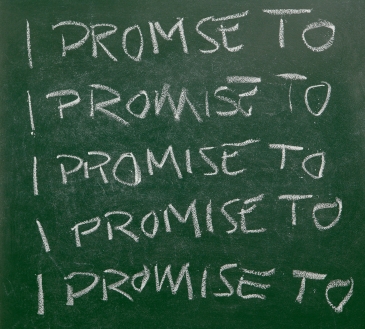 Springtime of the second year in an MBA program is when students turn reflective. For the class of 2009, it was also a year in which the job market for MBAs looked daunting, to say the least. With the economy in the pits and the degree in some disrepute, several members of the Harvard Business School class of 2009, encouraged by faculty members Rakesh Kurana and Nitin Nohria, developed an earlier version of an “MBA Oath,” and began to publicize it.
Perhaps more importantly, the Oath has become something of a movement. It has a permanent home, at http://mbaoath.org/ . It is a 501(c)3 organization, and has an Executive Director, Peter Escher (signer number 5 of 1704, as of today). It has spread well beyond Harvard Business School, and in fact the mission is to develop chapters globally.
PE: It’s an embodiment of our belief that things have changed over the past few decades, and that business has responsibilities to do things right, and obligations to society. Mechanically, it’s a preamble about the role of business, and eight specific tenets. A key part of the statement is “my purpose is to serve the greater good.” A sample tenet is “I will act with utmost integrity and pursue my work in an ethical manner.”
PE: The spring was a time of reflection—the role of an MBA was very much on our mind, what with Harvard MBAs in leadership positions at so many Wall Street institutions, and the indictment of business leadership in general. Rakesh and Nitin pointed us to some early versions of the Oath that had been developed, along with the World Economic Forum. We took it from there, aiming just to get 100 signers. Of course it went well beyond that.
PE: To the oath/ethics connection, we note that law and medicine have very similar oaths. We are trying to get business to emulate those models.
To the enforcement issue, the oath won’t prevent bad actors from acting badly; but it can give aid and comfort to those who want to do the right thing by saying it publicly, along with others.
To the Harvard spin, we want to make this very much not about Harvard, but about business and MBAs in general. As to spin in general, well that’s a sad indicator of how big a hole we’ve dug ourselves as MBAs and businesspeople.
PE: We have oath signers from over 250 MBA school programs at this point, and have active participation (attend our conference calls and the like) from over 25 campuses. We’d like this active participation to grow to even more schools. We want to expand our Board membership to other schools.
We held a Fall Summit, with representatives from 9 business schools, and from the Aspen Institute and the United Nations Global Compact.
PE: We’d like to get 10,000 MBA signers by next year at this time. Since the top-55 US-based MBA programs (according to US News & World) generate roughly 12,000 graduates annually, it implies that we need to focus on US and non-US programs, and alumni as well.
PE: As a touchstone, a guideline for discussion, and a tool for education. It is a way for like-minded people to identify each other. We’re not out to codify rules or procedures for every situation. We want to productively guide discussions, and to enable signers to have guidelines in mind before they go into challenging situations.
PE: One thing we’re aware of is that transaction costs in the economy are increasing massively. Trust is the scale answer to cutting down on transaction costs. If you didn’t have trust, business wouldn’t happen at all. And if we had more trust, it’d work a lot better.
A nice first step.
As a performance coach, for me, it’s all about walking the talk. Mr. Escher says, "As a touchtone, a guideline for discussion, and a tool for education. It is a way for like-minded people to identify each other. We’re not out to codify rules or procedures for every situation. We want to productively guide discussions, and to enable signers to have guidelines in mind before they go into challenging situations."
I’d like to see a compilation of "case scenarios" where MBA oath signers were, in fact, challenged at 9:00 Monday morning and how/why they chose, or did not choose, to do the right thing. Could use real names or "anonymous" and indicate what supported them, or limited them, from acting according to the oath. The point is not about the oath; the point is about honoring it, or not, in real time and why.
This next step might provide an opportunity for reflection by the faculty at Harvard and other institutions who espouse the oath, or perhaps, it may prove too uncomfortable. Talk is more comfortable these days. Action, well, not so much.
A couple of things I really appreciate about this post: Peter’s candor (for example, his surprise at how it’s taken off) and his request for feedback/a point of view–whether in agreement or not. What a refreshing interview!
Great post!
There are some amazing initiatives currently happening around the world relating to new paradigms and guidelines for manager.
http://www.canadianmbaoath.com
Very exciting to see all this dialogue.
Harley.